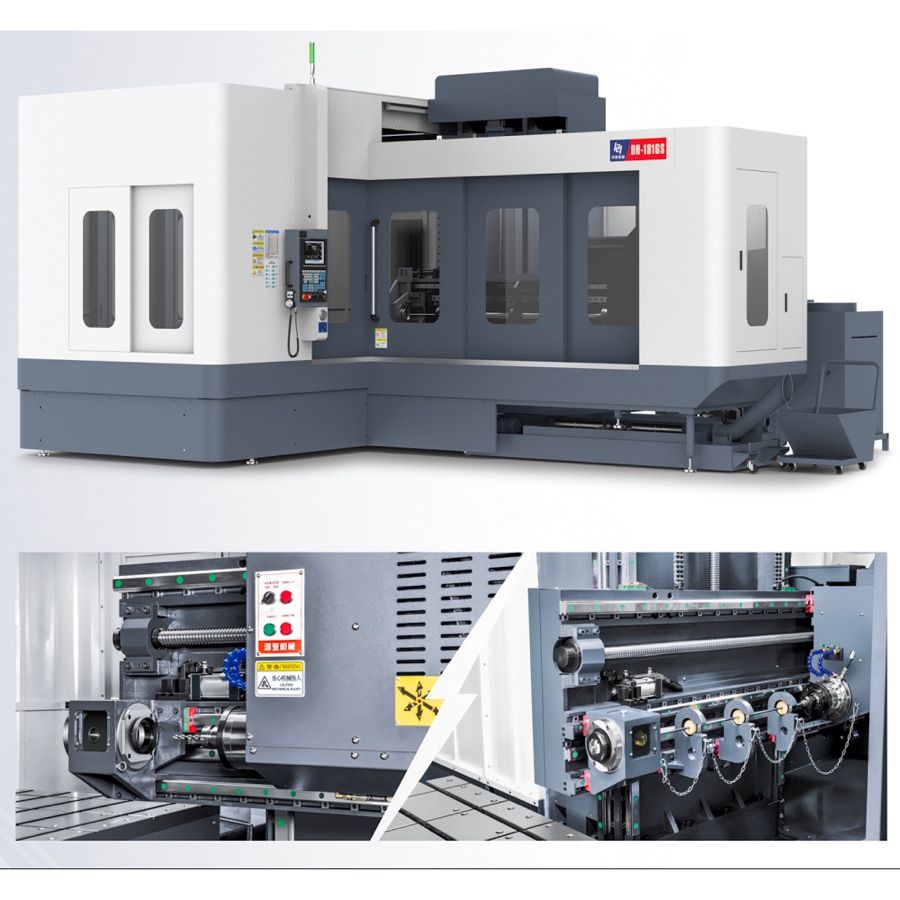
For medical components, choose a CNC deep hole drilling machine from the documented part requirements rather than from a generic industry label. Start with seven inputs: drawing, material and condition, hole diameter and depth, tolerance, surface requirement, production target and acceptance method. HYM publishes DM drilling-milling, DH horizontal gun drilling and AMD five-axis drilling-milling platforms with representative drilling ranges from Ø1.5 mm to Ø60 mm; final machine capacity must be confirmed against the part, tooling, fixture and agreed cutting process.
1. Which hole details change the machine recommendation?
Hole diameter, depth, entry condition, angle and the required locations are the first inputs. A drawing should show each controlled feature because one component can require drilling, milling, tapping or positional indexing in the same setup.
For reference, HYM publishes representative drilling ranges from Ø1.5 mm to Ø60 mm across the DM, DH and AMD families. The published range is a starting point, not a substitute for checking the selected model and part.
2. Why does material condition belong in the inquiry?
State the alloy, material condition and any relevant hardness range. Tool selection, coolant delivery, guide support and cutting data must be matched to the material rather than assumed from the component name.
Record at least one material specification with the drawing so the supplier can assess process risk before quoting. If the production material differs from the test material, the acceptance result may not represent production.
3. Which machine path fits the process?
DH platforms focus on horizontal gun drilling when a dedicated deep-hole process is appropriate. DM platforms combine deep-hole drilling with milling and tapping, while AMD platforms add multi-axis positioning for angled or multi-face work.
HYM lists three published families—DM, DH and AMD—plus custom configurations. The correct choice depends on the complete process route, part envelope, required fixture and output target.
4. What should be specified for coolant and chip control?
Specify the tool type, hole geometry, expected cutting conditions and any cleanliness requirement. Coolant pressure, flow, filtration and chip evacuation are linked variables, so a pressure value alone does not define a stable process.
HYM publishes maximum oil pressure up to 100 kgf/cm² on representative DM and DH data. The required value is process-specific and should be confirmed with the chosen tool diameter and coolant system.
5. How should buyers validate the proposed process?
Agree a representative workpiece or coupon, tooling, cutting conditions, measurement locations and pass/fail criteria before the factory acceptance test. This makes the review reproducible for both buyer and supplier.
Use one signed FAT plan to record machine identity, the installed configuration, hole measurements and the test boundary. HYM’s FAT checklist explains the 12 evidence areas buyers can include before shipment.
6. What should the quotation include?
Request an itemized scope for machine configuration, coolant and filtration, tooling, workholding, controls, acceptance, documentation and service. A comparable quotation separates included equipment from buyer-supplied items.
Compare at least 12 scope checks when reviewing deep-hole machine quotations. This prevents a lower initial price from masking a missing process-critical item.
Send the part data for a process-based review.
Share the drawing, material, hole data and required acceptance evidence. HYM can review the application before recommending a platform.
Request Engineering ReviewFAQ
What information is needed to specify a deep hole drilling machine for a medical component?
Provide the drawing, material and condition, hole diameter and depth, tolerance, surface requirement, production target, loading method and required acceptance evidence.
Which HYM platform can be evaluated for medical-component drilling?
HYM publishes DM drilling-milling, DH horizontal gun drilling and AMD five-axis drilling-milling platforms. Selection depends on part geometry and process requirements.
How should a buyer validate the drilling process?
Use an agreed representative part or coupon, tooling, cutting parameters, measurement method and pass/fail criteria in the FAT plan before shipment.